Regulatory Compliance • Rules Engine • Omnichannel Service Design
Digital Self-Service Engine: Automating Regulatory Guidance
Streamlining complex, multi-party workflows to reduce administrative burden and human error.
Highlights
Lead Product Designer & Researcher
Role
Platform
iOS, Android, Web, Internal agent dashboard
+$1M in annual Opex Savings, –19% Call Volume, 0% → 25% Digital Resolution
🏆 Awarded Capital One Diamond Award for impact & results
Duration
1 year
Impact
Company
Capital One
Executive Summary
Led the end-to-end redesign of Title Maintenance — a process that could stretch to 64 days for the customer. Discovery showed the core issue wasn't completion speed, but clarity: most customers didn't actually know if a title change was required in the first place. I used that insight to pitch a new rules-engine investment to leadership, then led the end-to-end design of a transparent, digital self-service ecosystem that delivered significant operational efficiency and rebuilt customer trust.
The Problem
Customers faced a confusing, high-effort journey when managing vehicle titles — a process that affects roughly 23,000 customers a year, drives about 15,000 phone calls a month, and had never gone through customer empathy research. The process lacked clear guidance, digital resolution options, and proactive updates, forcing users to rely on inaccurate online information or manual intervention from the DMV and lenders. Baseline NPS for the experience sat at 43.
Discovery
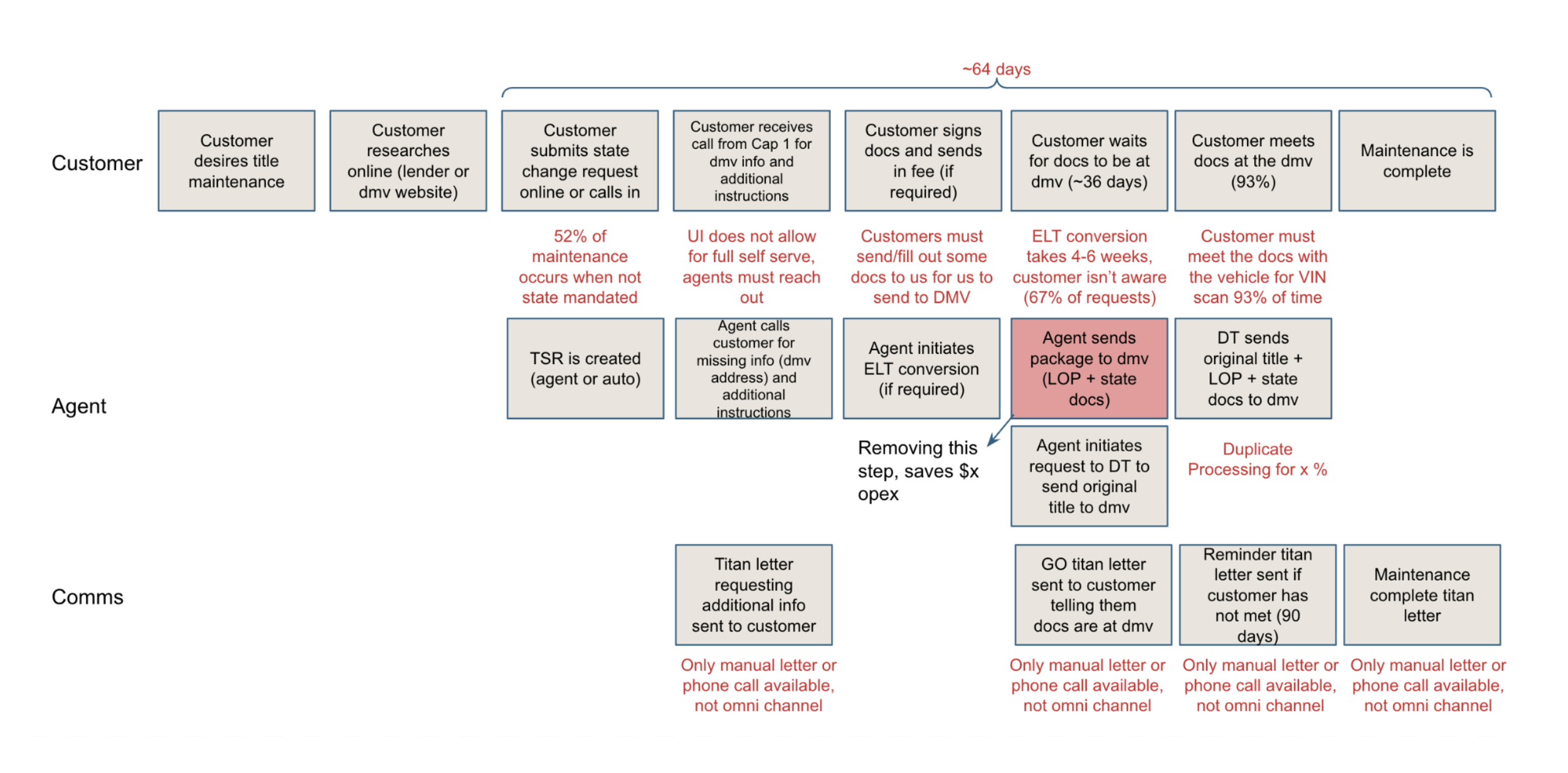
I started internally with process documentation, data, stakeholder conversations, and side-by-sides with agents working real requests. From there, I partnered with product and process managers to verify state rules by calling DMVs in all fifty states.
The sequencing was deliberate. Understanding the process from our side first meant customer interviews could focus on what only customers could tell us. From there I ran empathy interviews, with engineers and product managers sitting in, and mapped the journey end to end.
Customers didn't understand the process — even those already in it. 100% of research participants didn't understand the title maintenance process, even though 8 of 10 had already initiated it themselves. Rather than going to a DMV or title office, participants researched on Google, YouTube, or contacted their lender directly. Two of ten had refinanced their loan specifically to update their title, because the process with their existing lender felt too complex to navigate any other way.
"I don't know why we can't just do it all online. You can do basically everything else online." — research participant
The key finding: 52% of requests occurred when title maintenance wasn't actually state-mandated. Customers weren't struggling to complete a title change — they didn't know whether they needed one in the first place. That insight reframed the entire strategy, from optimizing the existing process to helping customers determine the right path.
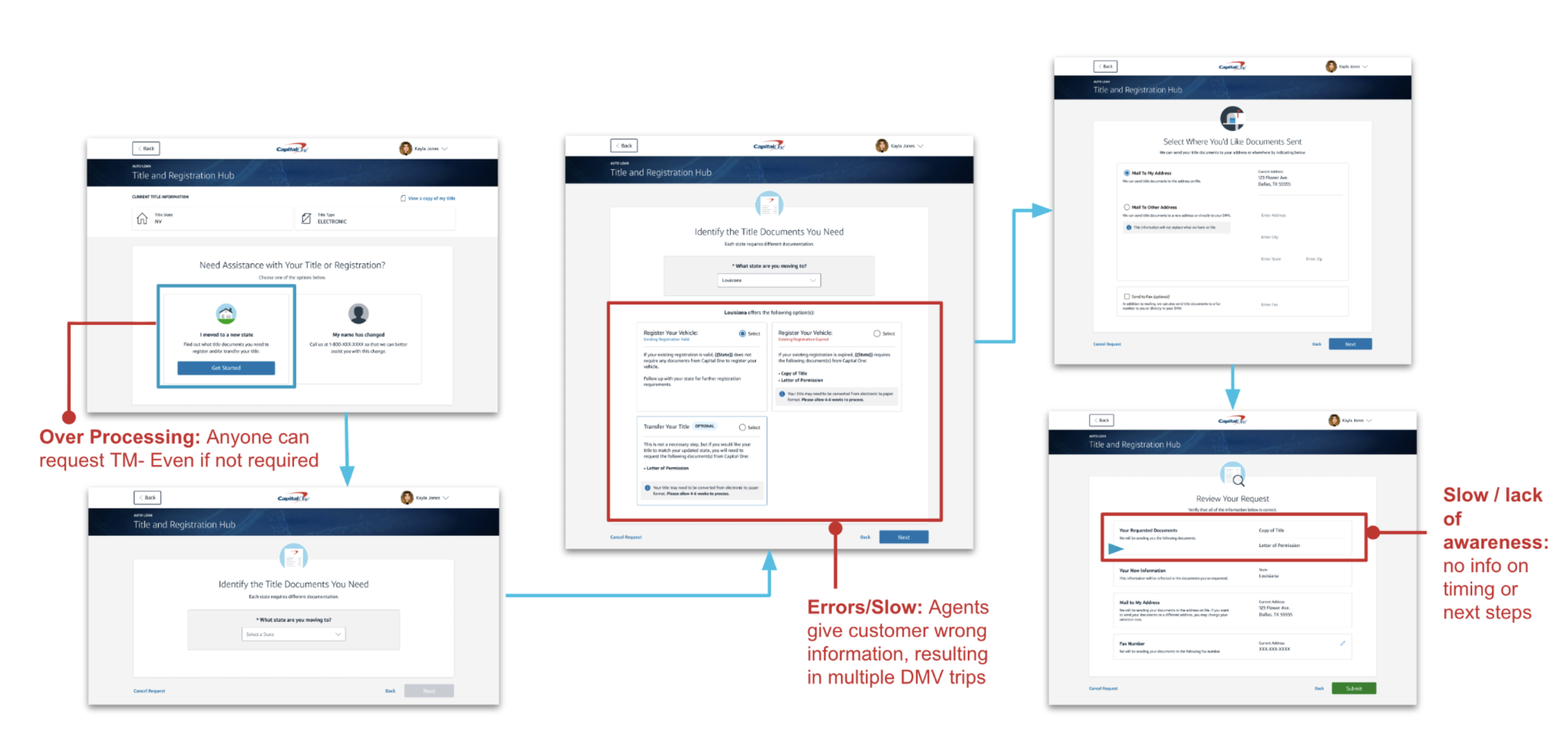
Original UI
The research also surfaced how far the existing experience fell short:
The existing flow only handled a narrow slice of requests — mailing registration documents — and gave customers no real path to complete an actual title change online. Every other case still required a call, fax, or DMV visit: 0% of title maintenance requests were resolved through true self-service.
Electronic Title (ELT) conversion alone took 4–6 weeks, and customers weren't told about it — despite affecting 67% of requests
Customers had to physically meet mailed documents at their DMV or title office 93% of the time
Every touchpoint relied on manual letters or phone calls — no omnichannel options existed anywhere in the process
The original UI compounded these findings: anyone could request title maintenance whether or not it was required, agents sometimes sent customers on unnecessary DMV trips, and the flow offered no visibility into timing or next steps.
Ideation
Acting on this meant convincing leadership to invest in a backend rules engine spanning every state's requirements. They initially resisted, since states set and maintain title rules, not us. I came back with 2 points, which ultimately got the plan approved:
We couldn't control the DMV experience, but we could control the guidance we gave, and customers expected that from us regardless of whose rule it was.
I built a cost-benefit analysis with product and our business analysts quantifying the savings.
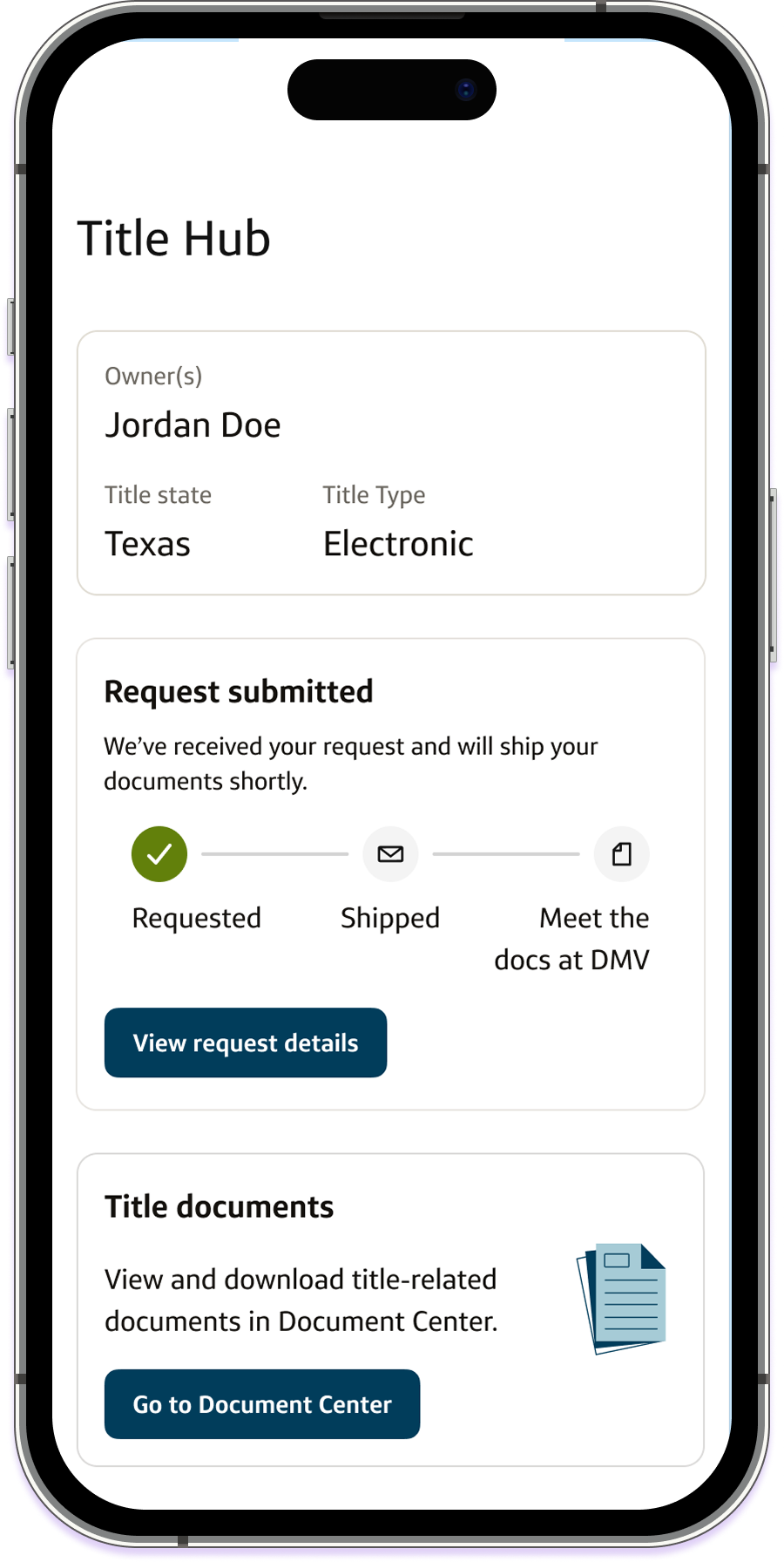
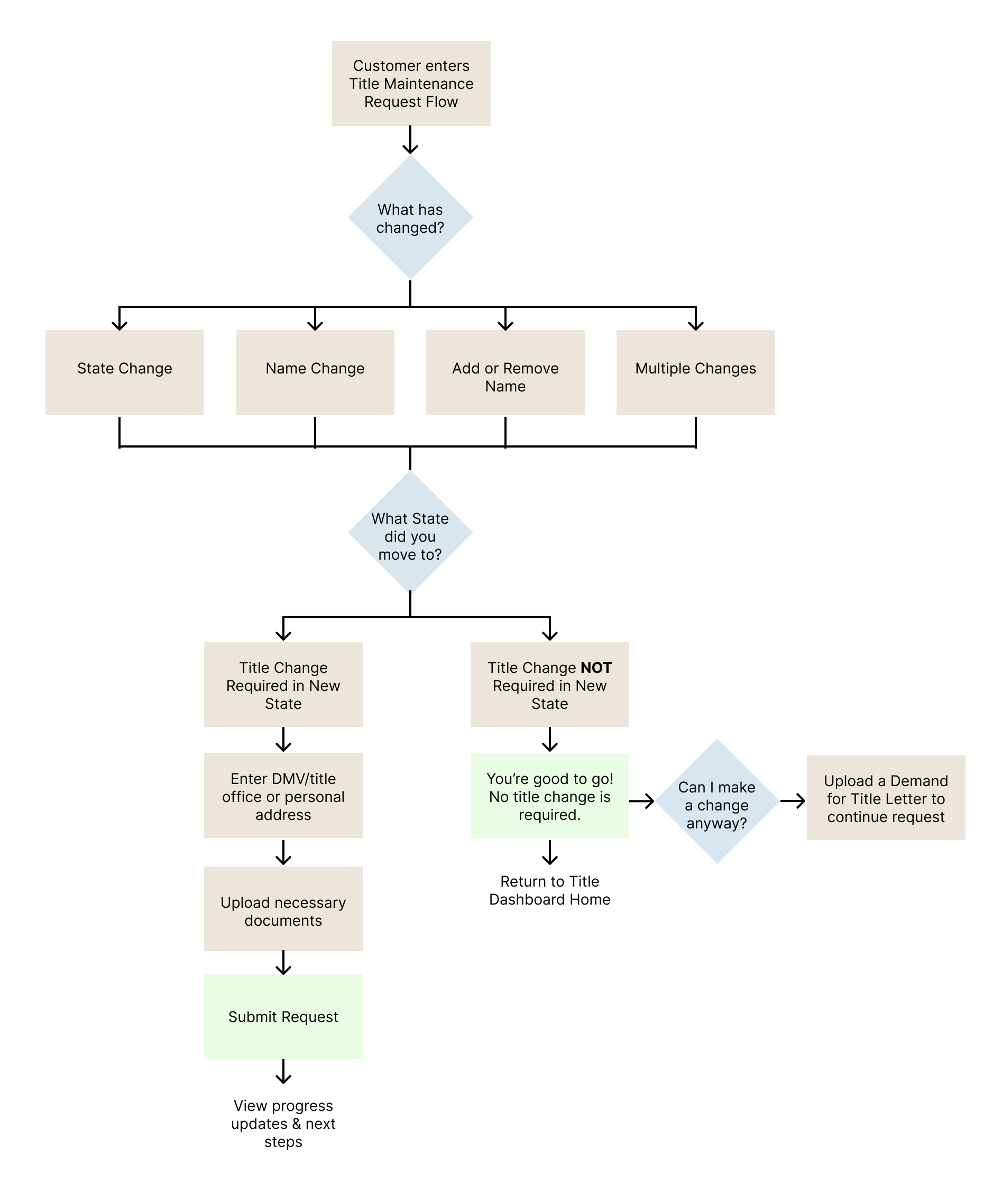
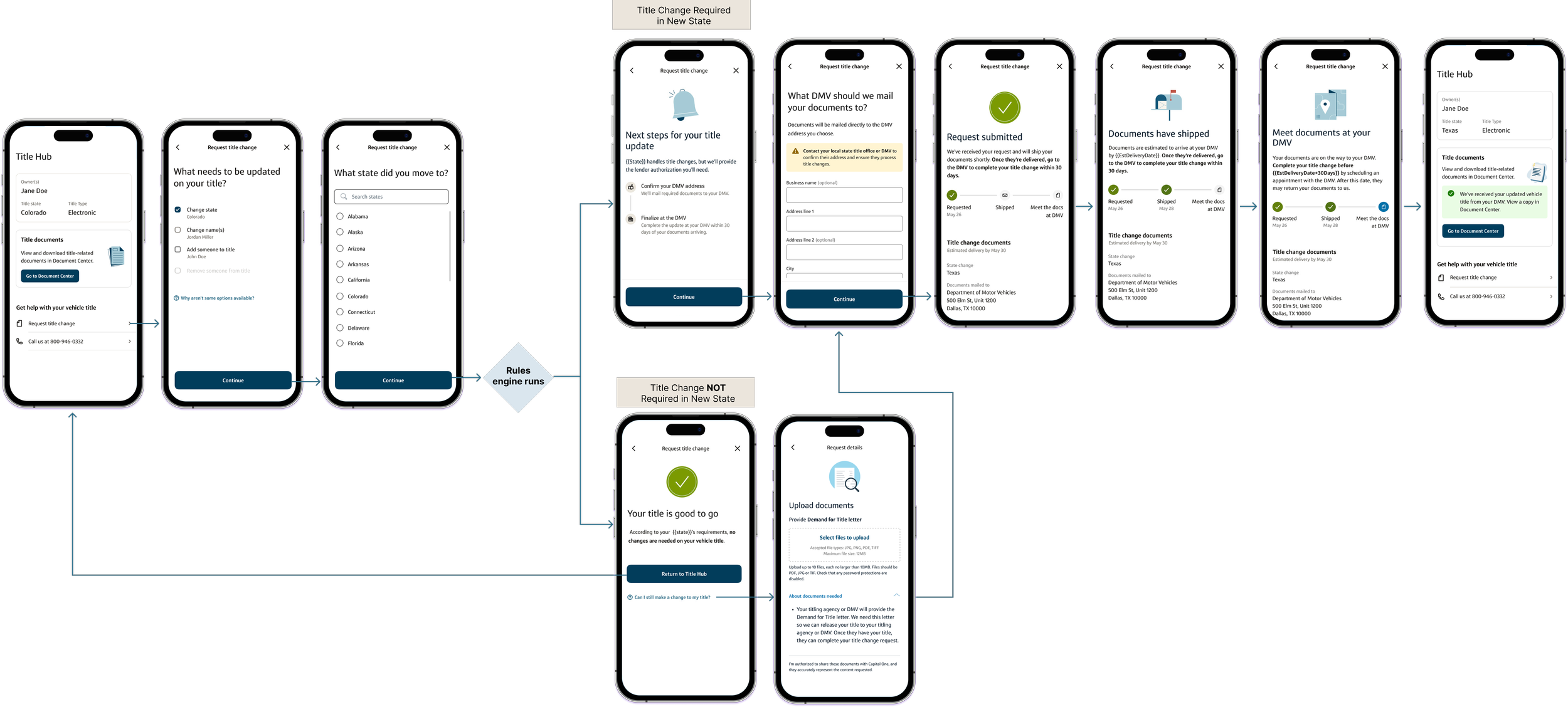
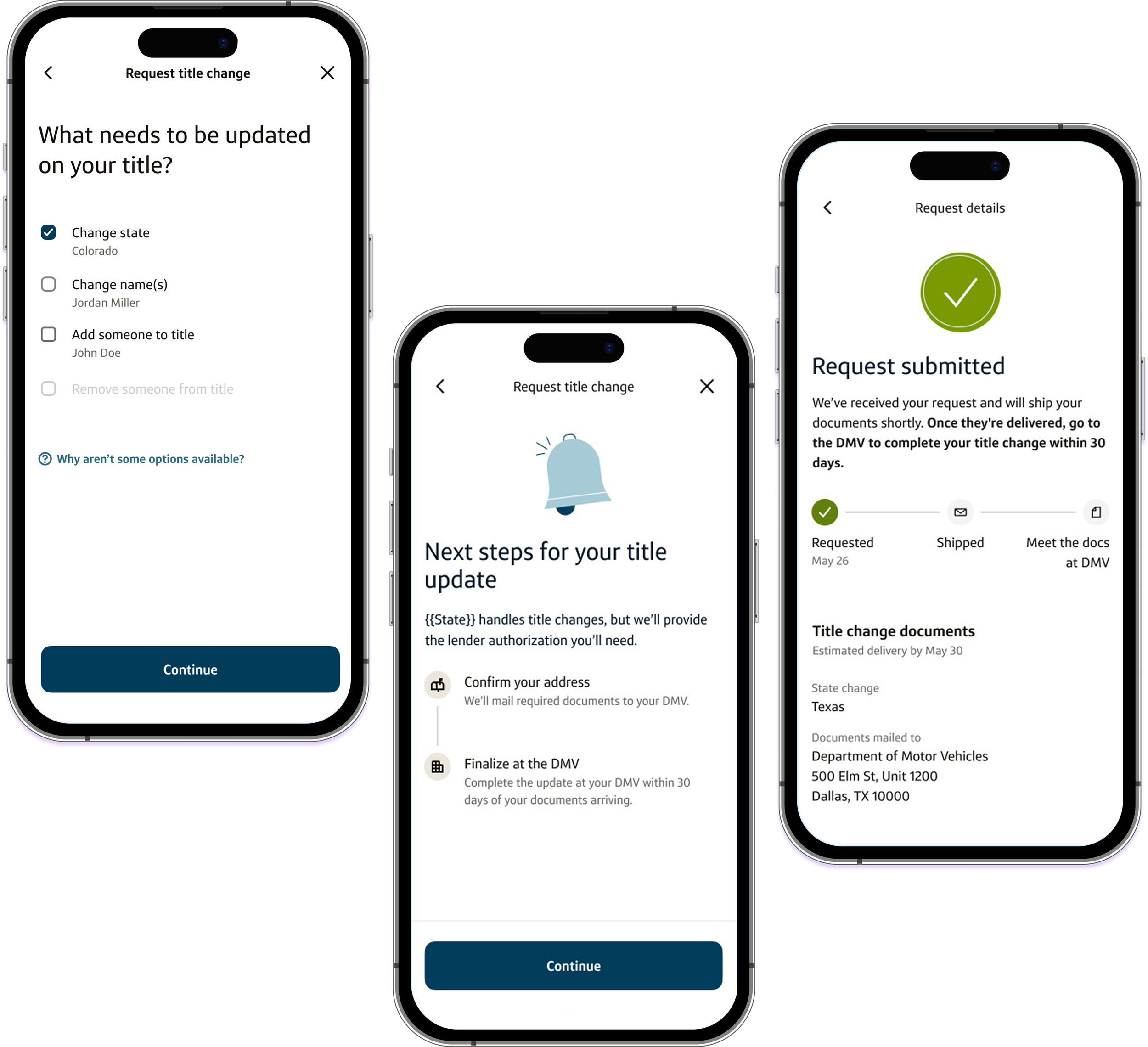
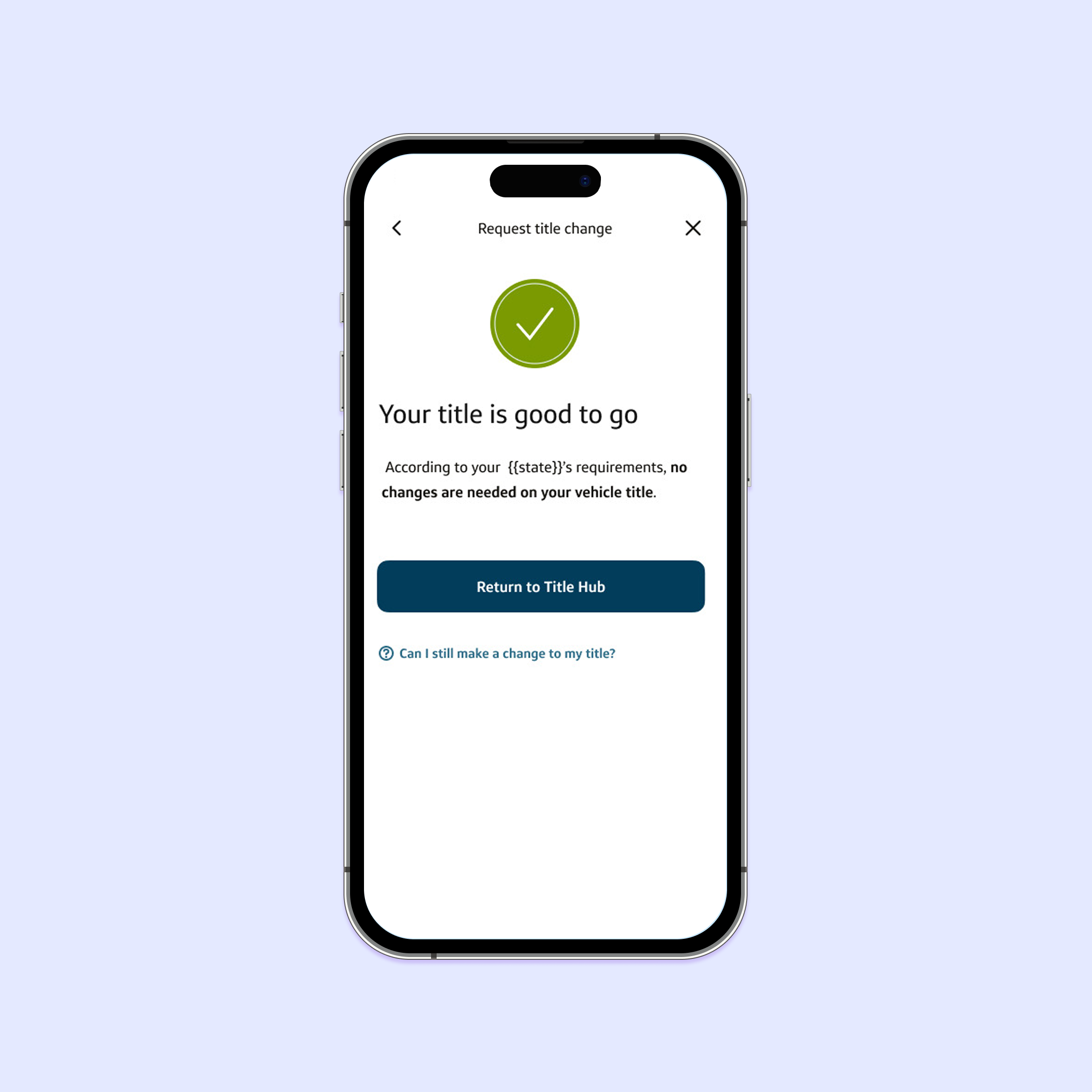
After several rounds of iteration and testing, I redesigned the flow around that rules engine, which runs the moment a customer selects their state, automatically routing them down one of two paths: no title change needed, or a guided document flow with the exact steps and DMV requirements. Customers are kept updated at every stage, from submission to documents shipping to the DMV.
Communications Strategy
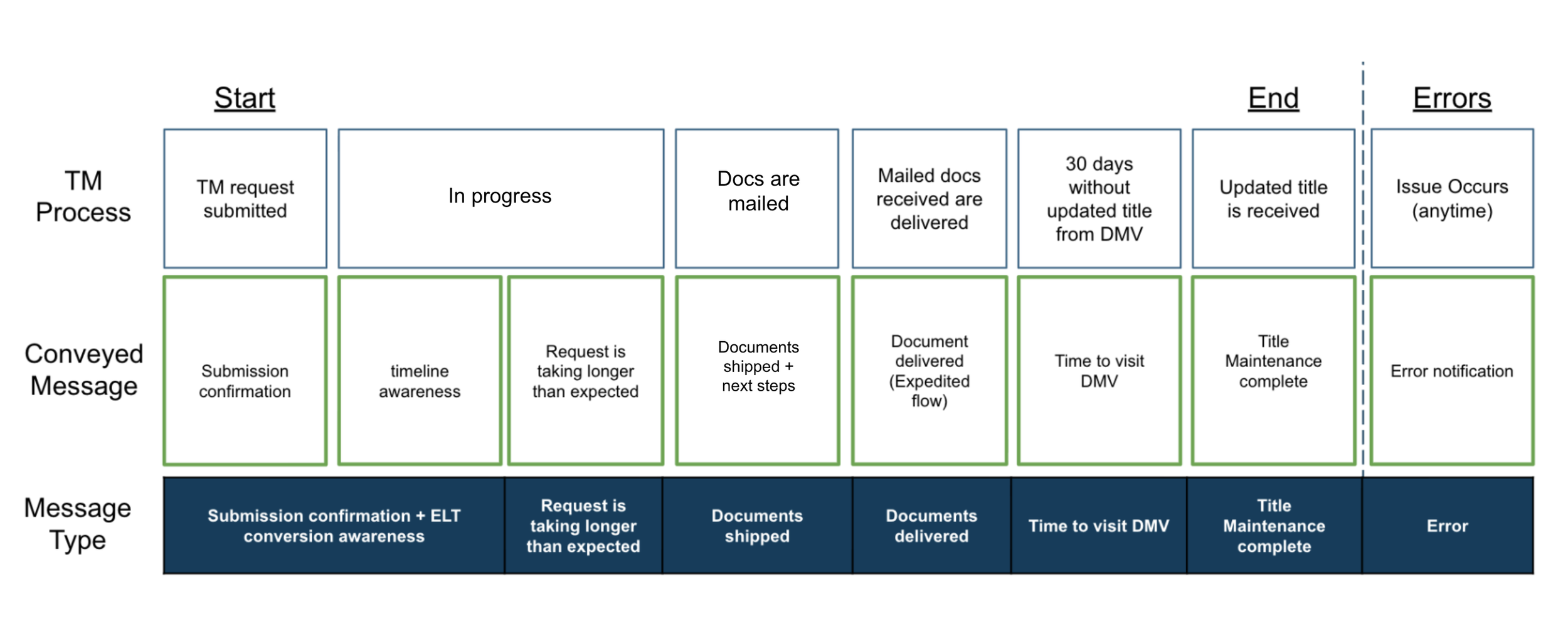
Alongside the redesigned customer flow, two more problems needed solving: keeping customers informed and giving agents a better way to service requests.
Customer interviews surfaced that people expect to be kept informed throughout the title maintenance process, so I partnered with stakeholders to design a communications strategy spanning the full journey — submission confirmation, in-progress updates, document shipment and delivery, a 30-day check-in, completion, and a dedicated message type for errors.
Internal Management System
Next, I addressed the problem of giving agents a better way to service requests.
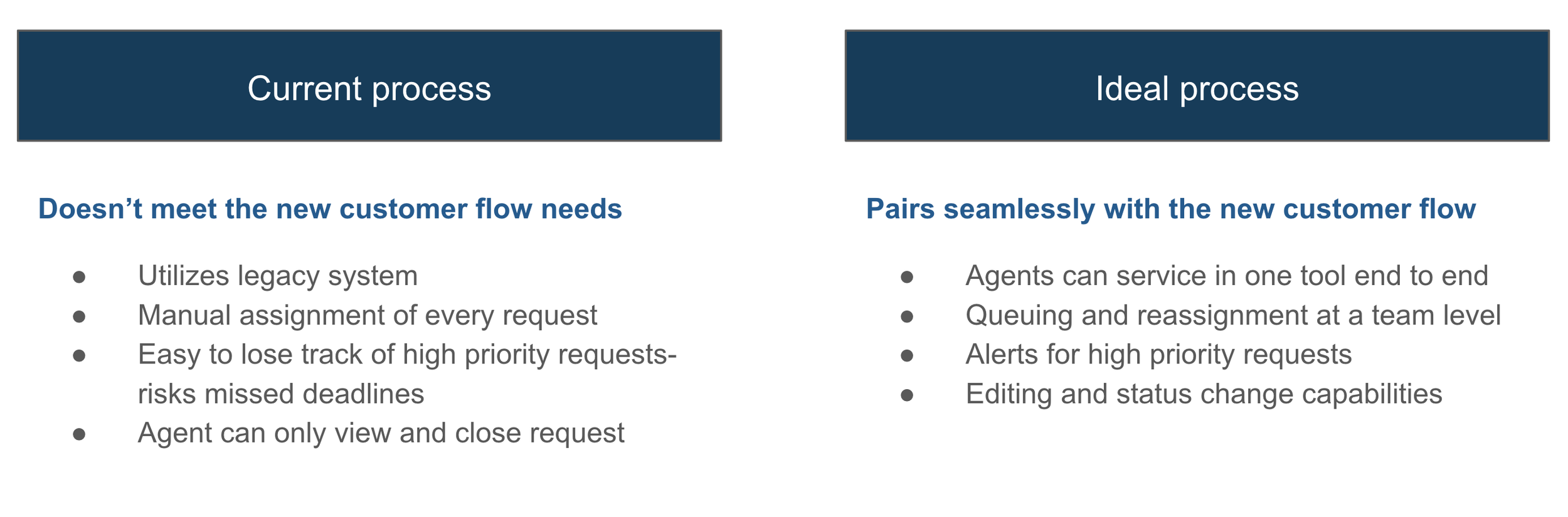
This came out of the agent side-by-sides: agents were working across 3 different systems to fulfill a single request.
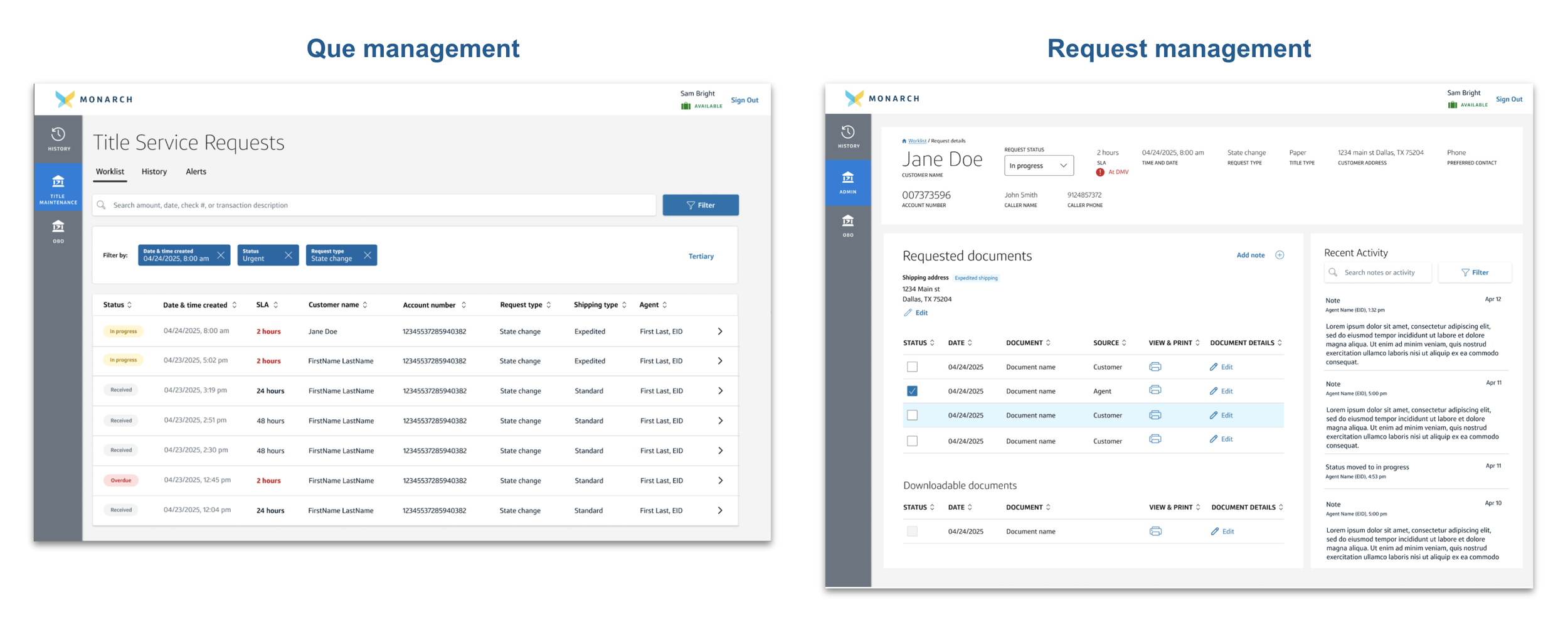
The new internal system gives agents two core views:
Queue Management, where requests are filtered, prioritized, and tracked against SLAs.
Request Management, where an agent can service a request end-to-end, track documents, and log activity — replacing a legacy tool that only allowed viewing and closing requests.
It's also connected to the customer experience. When an agent updates a request, the customer sees it. That link didn't exist before.
The Solution
I designed a dual-sided solution to bridge the gap between customer needs and internal capabilities.
Together, these pieces form a self-service system built on real-time rules-engine logic — transparent to the customer, informative at every stage, and finally manageable end-to-end by agents instead of just opened and closed.
Transparency
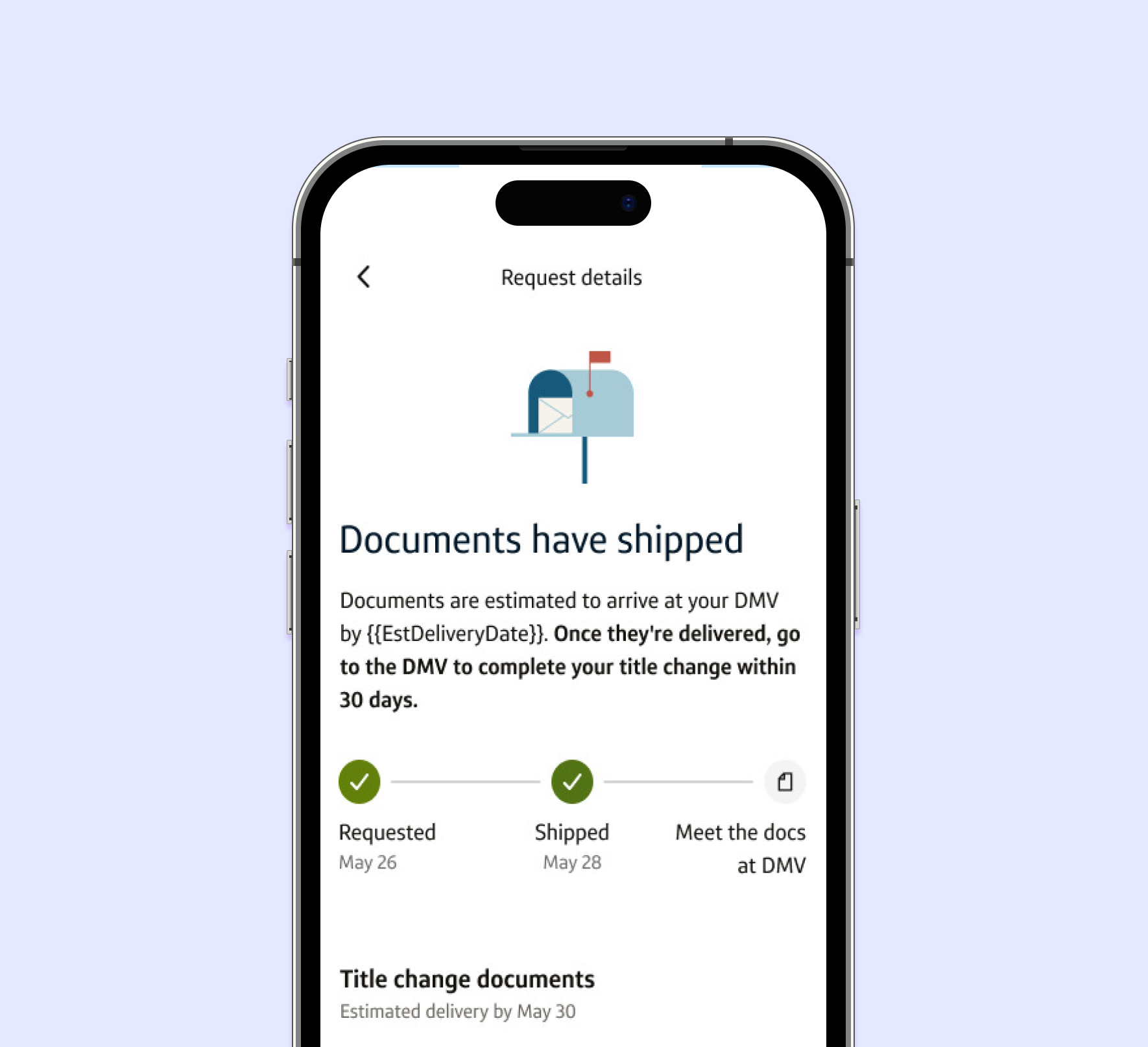
Digital Self-Service
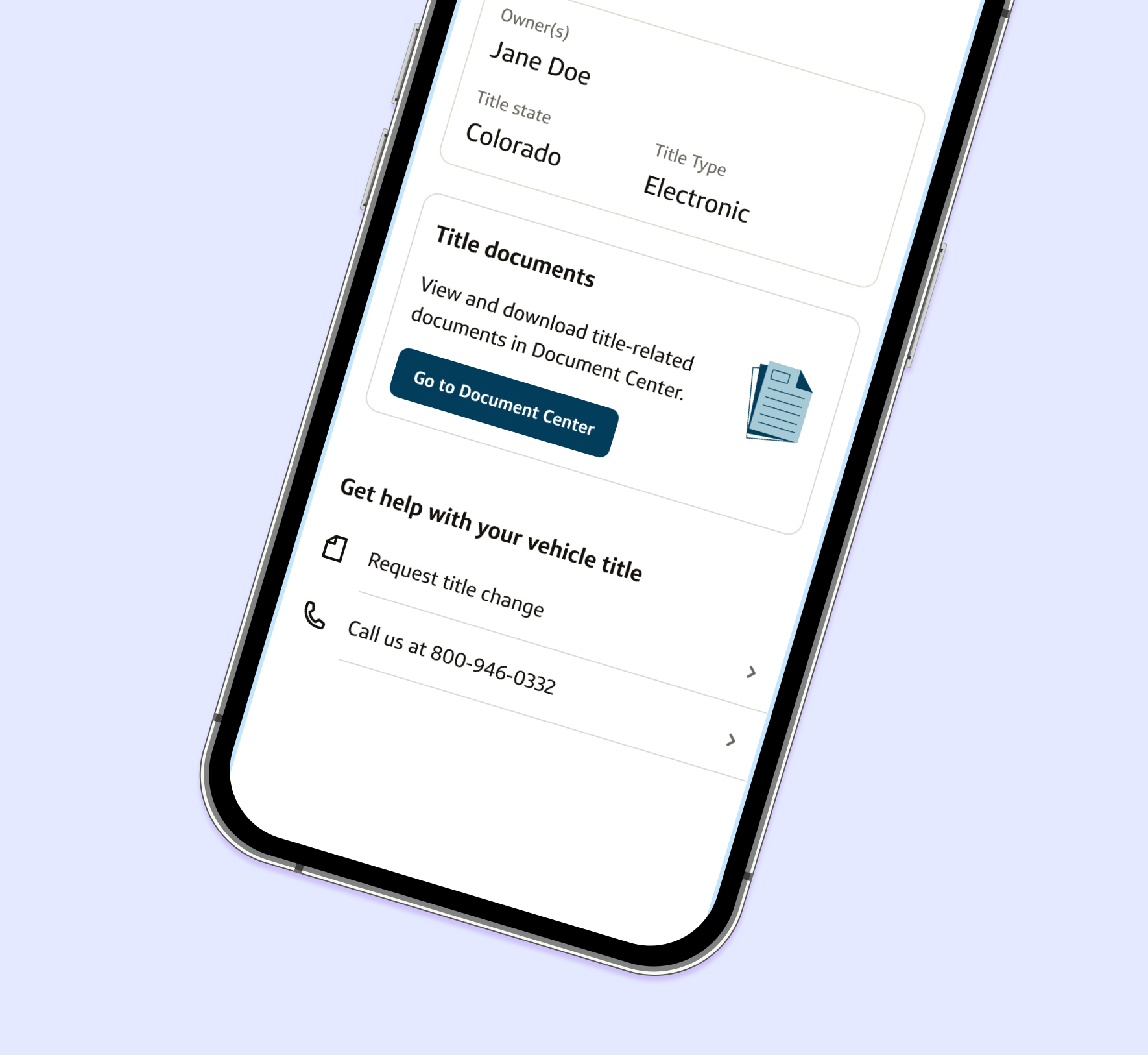
Internal Management System
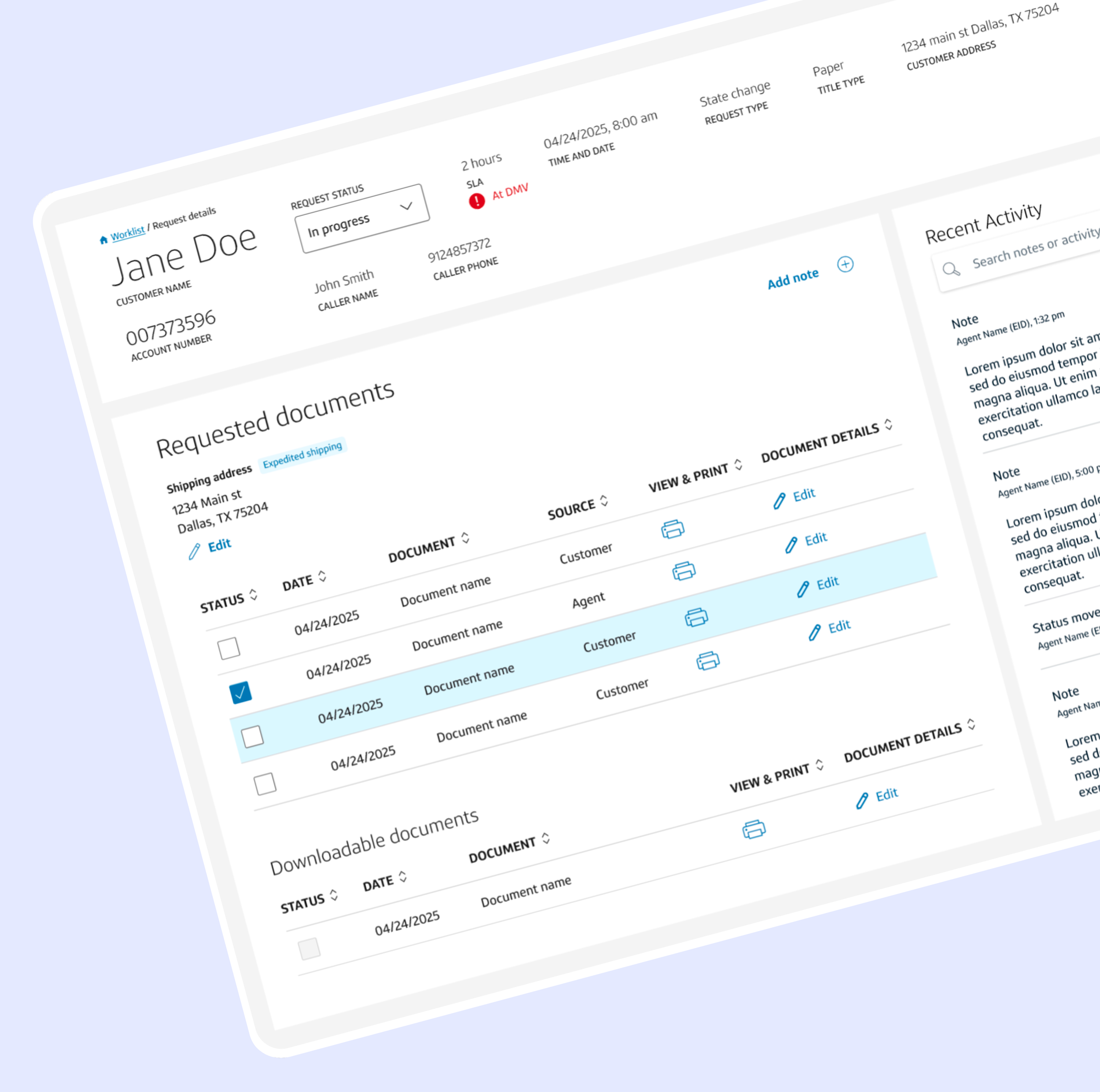
Omni-Channel Communications
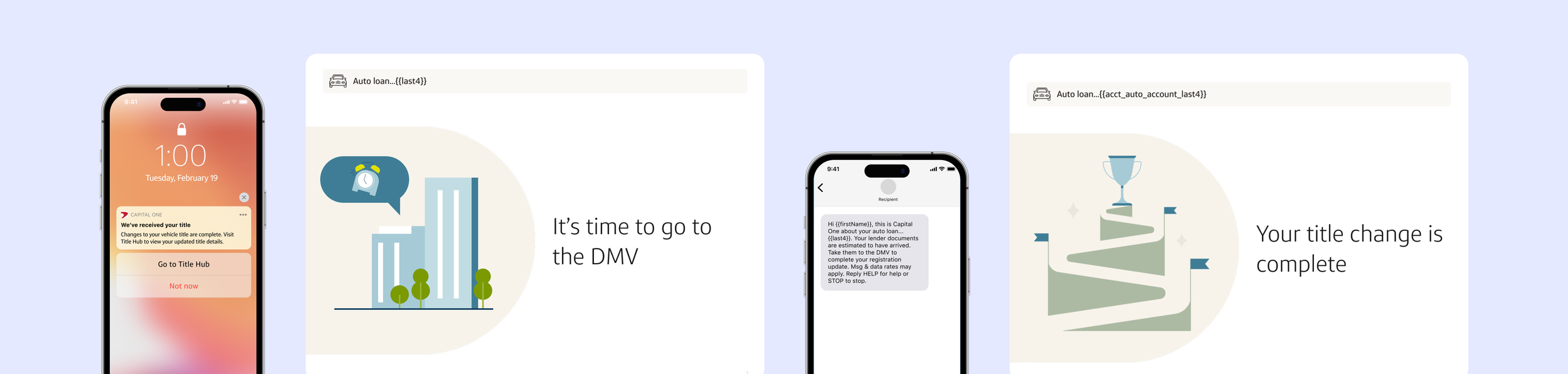
The Results
Of the four request types in this framework, State Change was the first to launch — the results below reflect that initial rollout.
~$1M in annual Opex Savings
Due to a 19% reduction in call volume and increased digital resolution.
–19% Call Volume
New UI and IVR routing directed customers to self-service, cutting call volume by 19%.
0% → 25% Digital Resolution
The state change flow introduced true digital self-service, taking resolution from 0% to 25%. The name change flow launches next, targeting 50% by 2026 year-end.
🏆 Diamond Award
Recognized with a Capital One Diamond Award for customer impact & business results.
Next Steps
Launch the name change flow (in progress) and continue expanding self-service coverage: targeting 50% of title maintenance requests resolved digitally by year-end.
Further personalize communications: Create additional channel-specific communications tailored to specific customer groups.
More Product Design Work
-
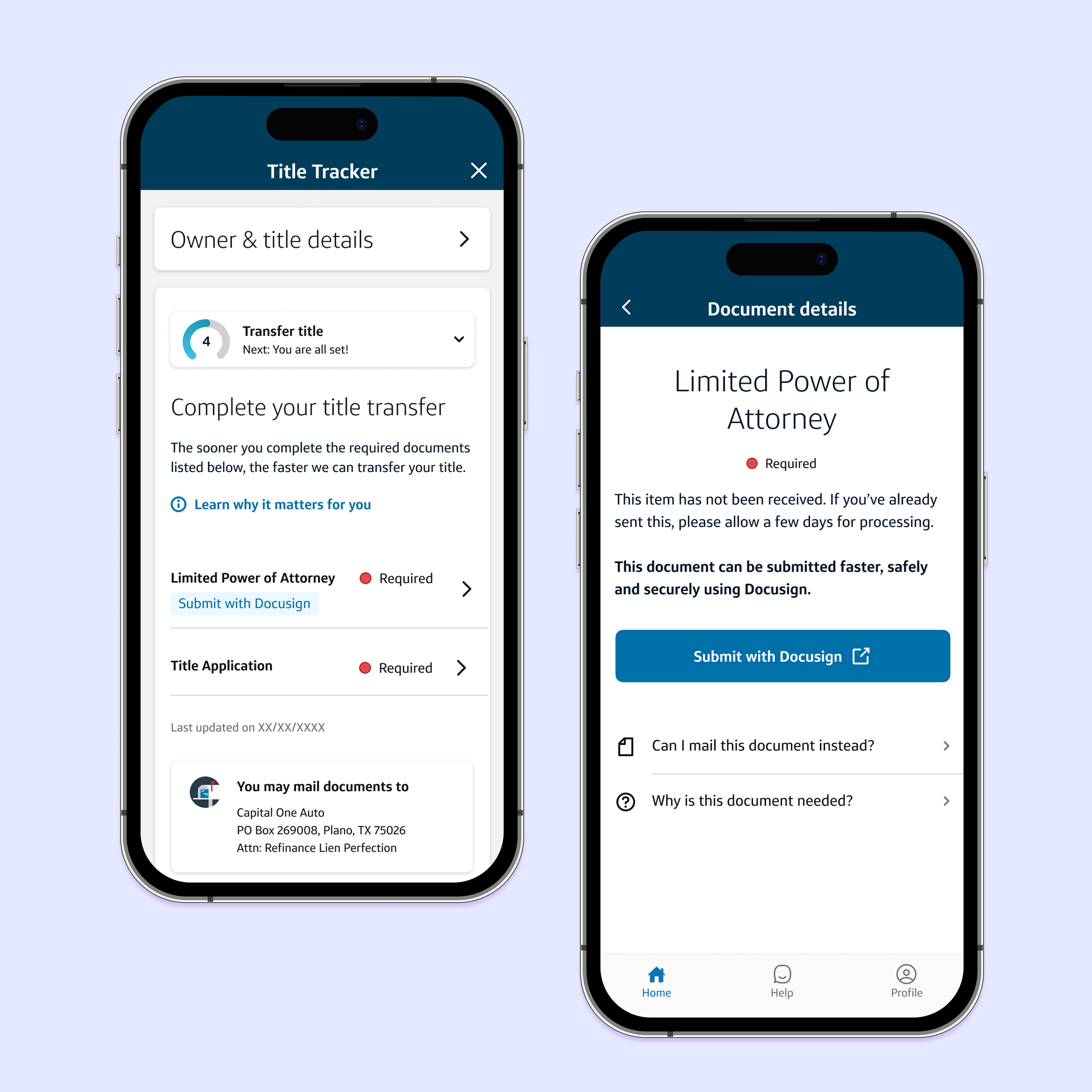
![Title Tracker Reimagined: Turning a 6-Month Black Box Into a Guided Experience]()
Title Tracker Reimagined: Turning a 6-Month Black Box Into a Guided Experience
-
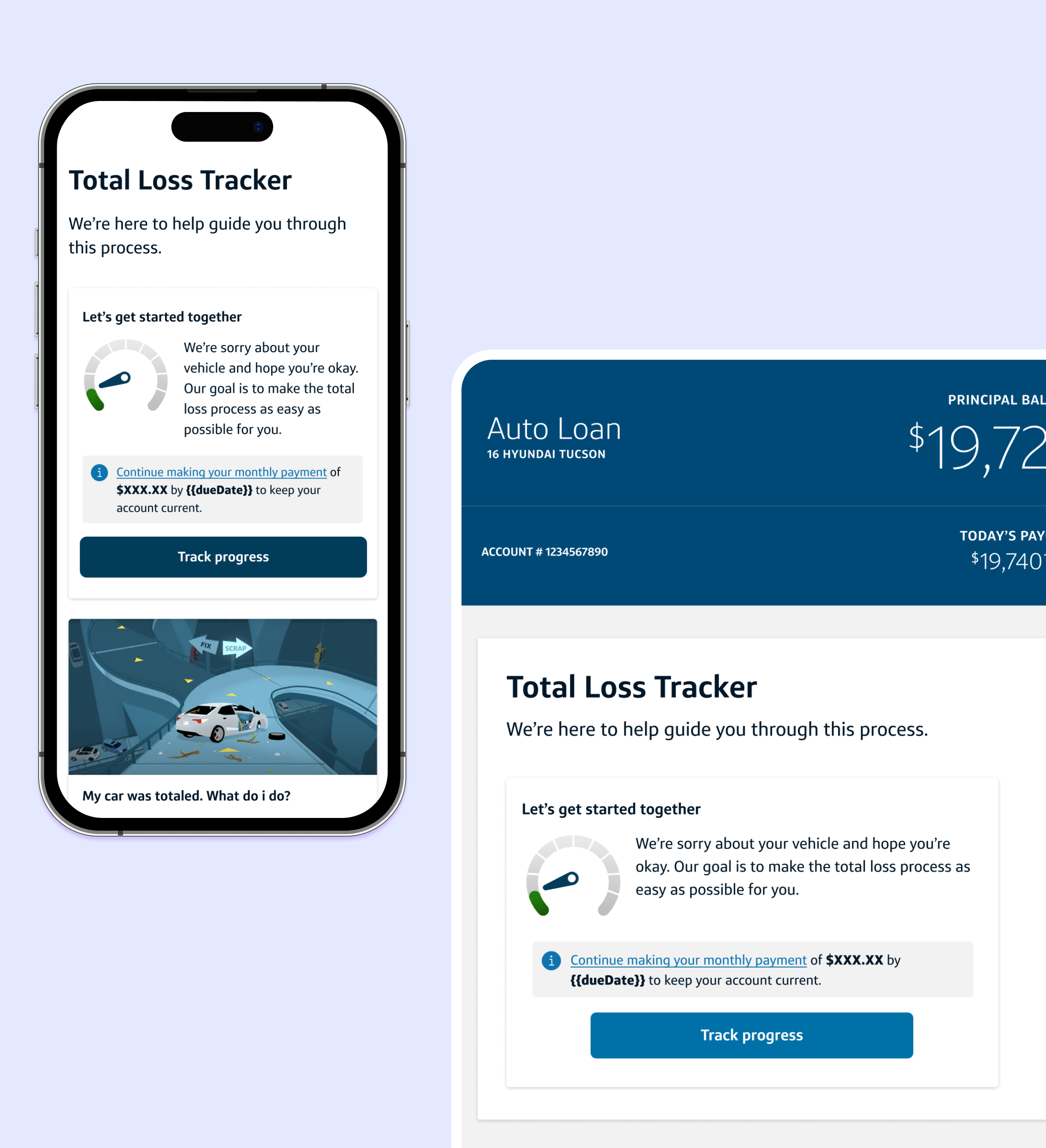
![Crisis Navigation: Financial Recovery After a Total Loss]()
Crisis Navigation: Financial Recovery After a Total Loss
-
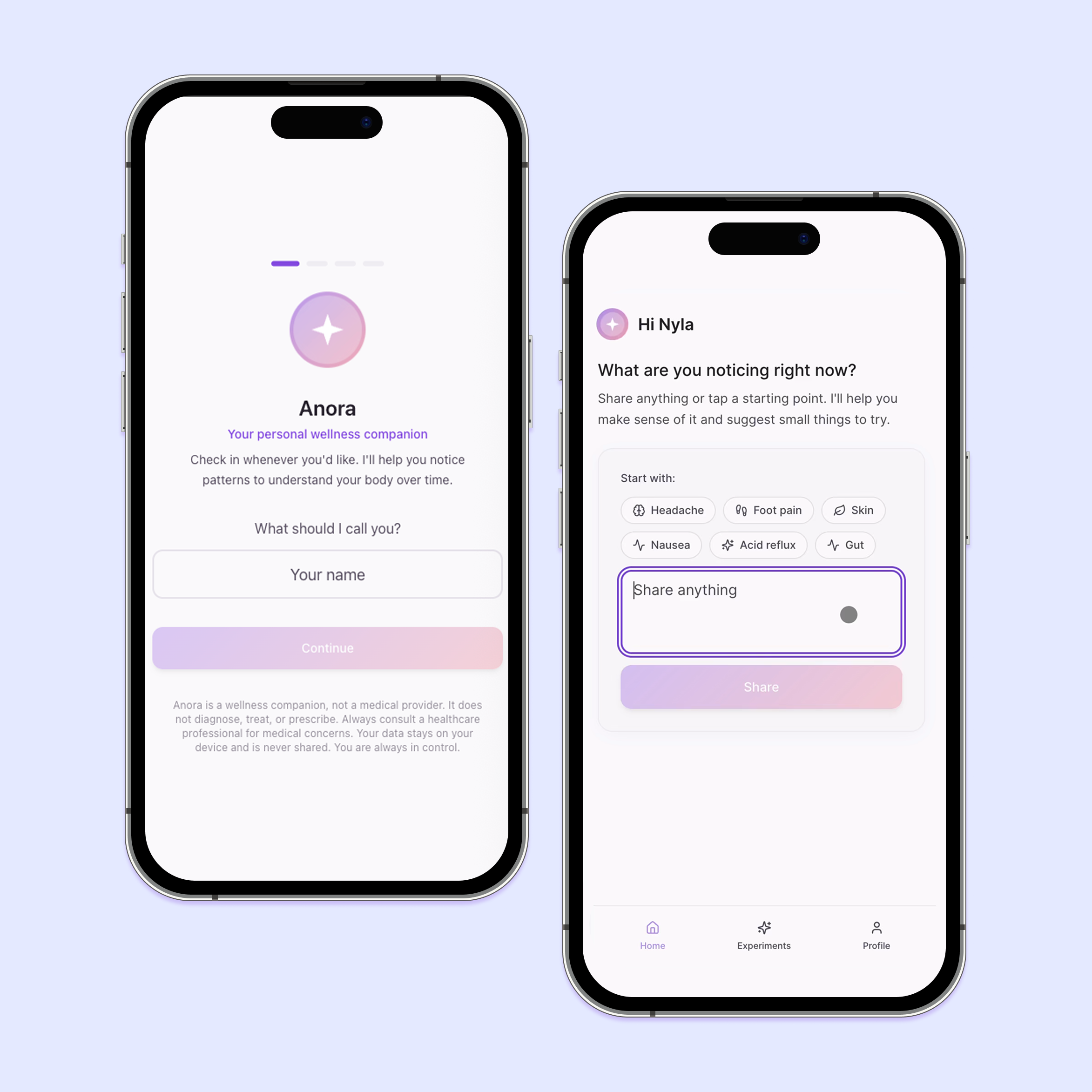
![Anora: Helping You Understand Your Body Over Time]()
Anora: Helping You Understand Your Body Over Time